Association between glenoid fossae positional asymmetry and condylar volume changes following maxillomandibular advancement surgery
Authors
- Holte MB, Nielsen TW, Berg-Beckhoff G, Thorn JJ, Ingerslev J, Pinholt EM

Abstract
Objectives
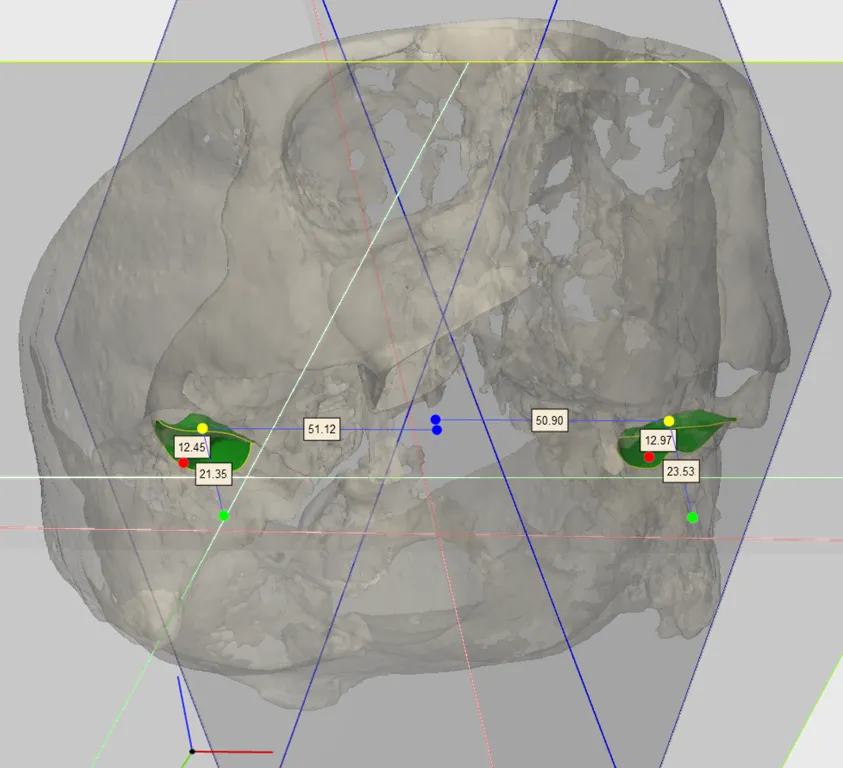
The purpose of this study was to investigate if positional asymmetry of the mandibular glenoid fossae is associated with post-operative condylar volume changes following maxillomandibular advancement surgery (MMA).
Methods
This prospective cohort study comprised subjects who underwent MMA and cone-beam computed tomography pre-operatively, immediately post-operatively and two-years post-operatively. The primary predictor variable was pre-operative glenoid fossae positional asymmetry (mm) between the right and left side in three dimensions. The primary outcome variable was post-operative condylar volume change (%) two years following MMA. Descriptive analysis was summarised by mean, mean absolute, and standard deviation. Multilevel modelling analyses examined the association between glenoid fossae positional asymmetry and condylar volume changes.
Results
The sample comprised 45 subjects with a mean age of 21.84 ± 4.26 years and 29 subjects (64%) were females. The mean advancement at pogonion was 10.90 ± 4.04 mm. The mean absolute mediolateral, anteroposterior and craniocaudal glenoid fossae asymmetry were 1.54 ± 1.26 mm, 1.56 ± 1.21 mm and 1.16 ± 0.98 mm, respectively. The mean right/left condylar changes were −10.73 ± 21.30%/-12.24 ± 20.70%, and they were highly correlated ( p < 0.001). A mediolateral positional asymmetry of the glenoid fossae was statistically significantly associated with a post-operative condylar volume reduction ( p = 0.001). Statistically significant differences were not observed in mediolateral ( p=0.15 ), anteroposterior ( p=0.96 ) and craniocaudal ( p=0.85 ) asymmetry between subjects with and without progressive condylar resorption. Horizontal advancement of the distal mandibular segment ( p = 0.005), sex (female, p < 0.001) and age ( p = 0.011) were statistically significantly associated with condylar volume loss.
Conclusion
Further research is required before glenoid fossae positional asymmetry may be included to accurately assess and treat maxillofacial deformities.