Are condylar head and neck inclinations associated with condylar volume changes following maxillomandibular advancement surgery?
Authors
- Nielsen TW, Holte MB, Berg-Beckhoff G, Thorn JJ, Ingerslev J, Pinholt EM
https://www.sciencedirect.com/science/article/pii/S0901502726002973
Abstract
Objectives
The aim of this study was to analyse the association of condylar head and condylar neck inclination with condylar volume changes 2 years following maxillomandibular advancement surgery (MMA) for prediction purposes.
Methods
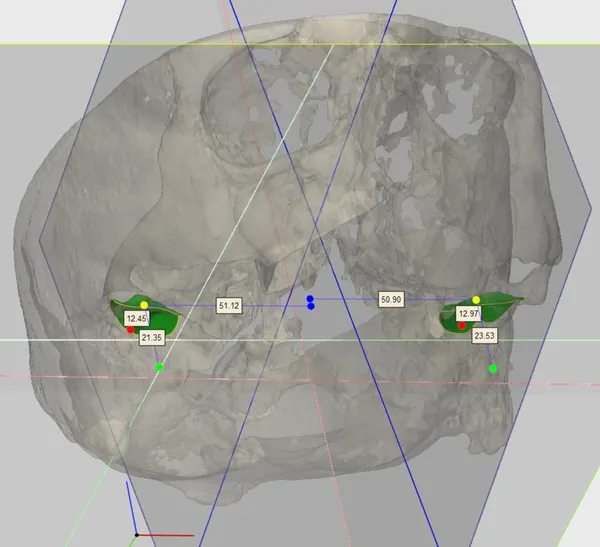
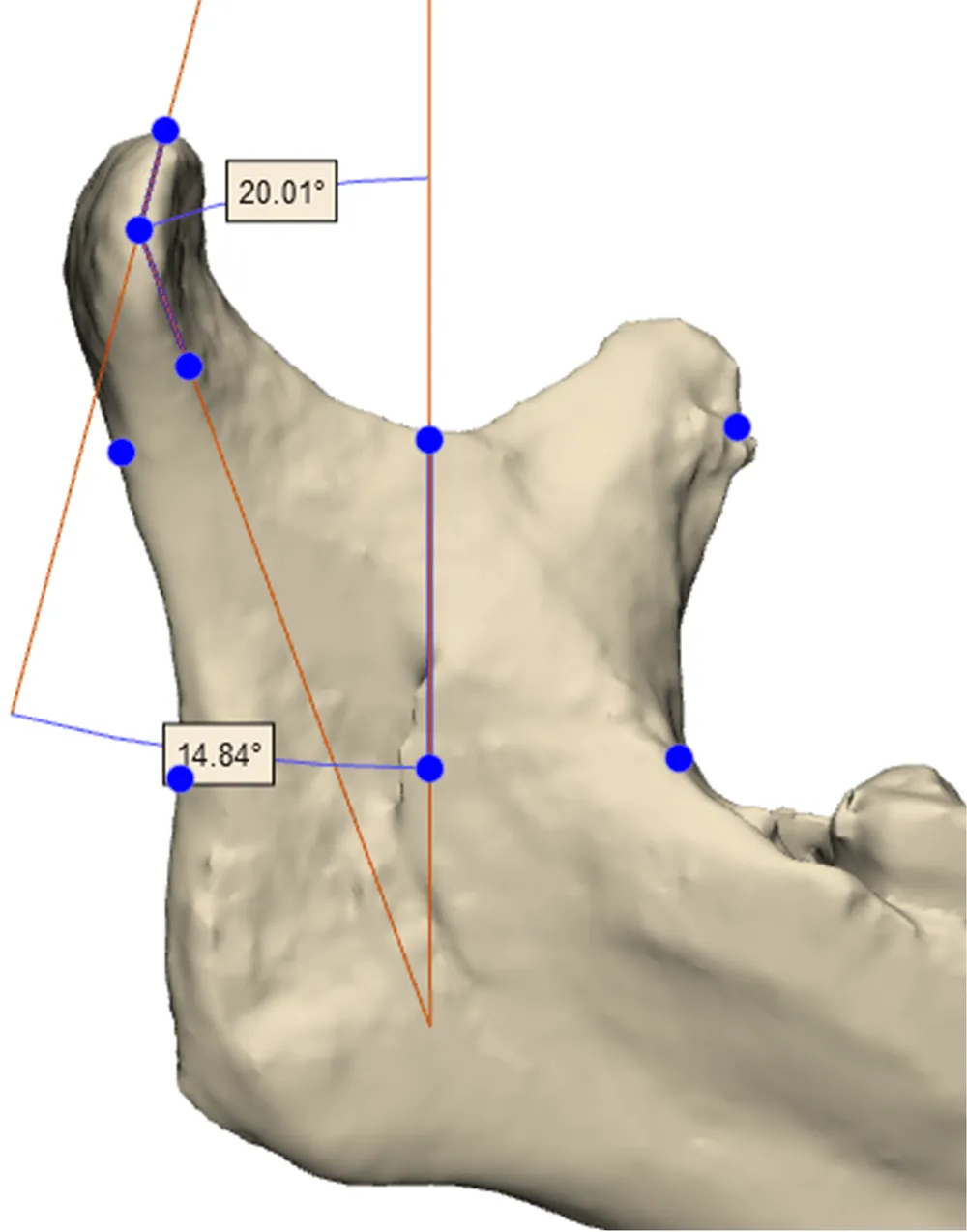
A novel method for assessment of the condylar head and neck inclination from cone-beam computed tomography (CBCT) was proposed and its reliability was assessed. The intra- and inter-observer reliability of the method was excellent, intraclass correlation coefficient >0.99, with mean absolute differences ranging from 0.7 to 1.5°. Pre- and postoperative CBCT (2 weeks and 2 years) of 47 patients (31 female, 16 male; mean age 21.72 years) was assessed.
Results
The mean preoperative condylar head inclination in the right and left sides was 9.55 ± 9.62° (anterior) and 9.23 ± 10.51° (anterior), respectively, while the mean preoperative condylar neck inclination was −10.62 ± 6.81° (posterior) and −8.33 ± 8.07° (posterior), respectively. The condylar volumes showed a mean decrease in the right and left sides of 9.98 ± 21.14% and 11.14 ± 20.96%, respectively. Condylar neck inclination was identified as a statistically significant prediction factor for condylar volume loss (P = 0.004), while condylar head inclination was not (P = 0.42). Mandibular condyles with progressive condylar resorption had a significantly more posterior condylar neck inclination preoperatively compared to those without (P < 0.001).
Conclusion
In conclusion, a more posteriorly inclined neck preoperatively was statistically significantly associated with a larger condylar volume loss 2 years following MMA. No statistically significant association between condylar head inclination and condylar volume loss was found.